Yes, scheduled winter tree removal is typically 10% to 20% cheaper in the Mohawk Valley than booking during the frantic peak season of late spring and summer.
However, lower rates are only half the story. In Upstate New York, winter is actually the most practical, least disruptive time of year to remove large, hazardous trees.
Most homeowners in Utica, Rome, and New Hartford assume tree care is strictly a warm-weather chore. When the temperature drops and lake-effect snow covers Oneida County, thoughts shift to heating bills and snow removal. But waiting until May or June to take down a declining tree often means paying top-dollar rates, enduring weeks of scheduling delays, and dealing with significant turf damage from heavy machinery.
At Utica Tree Removal, our crews work year-round across the Mohawk Valley. Here is an honest breakdown of why winter tree work saves you money, how cold weather protects your property, and the one critical mistake that turns a winter discount into a budget-busting emergency.
The Economics of the Off-Season: Why Rates Drop in Winter
Tree removal pricing is heavily driven by basic seasonal supply and demand:
- The Peak Season Rush (May – October): Spring storms, sudden summer windstorms, and regular landscape renovations trigger a flood of service calls. During these months, reputable tree services run at full capacity, often managing a 3- to 6-week backlog. When demand outstrips crew availability, prices stay firm at peak rates.
- The Winter Slowdown (December – March): Homeowners spend less time outdoors and stop noticing dead limbs. Because call volumes dip, established tree companies face a choice: park hundreds of thousands of dollars in specialized trucks and chippers, or price jobs competitively to keep their skilled, full-time crews working.
By booking during the winter lull, you benefit from off-peak scheduling. You get competitive pricing on labor, faster turnaround times from initial estimate to project day, and the flexibility to pick dates that suit your schedule.
Frozen Ground: Nature’s Free Lawn Protection
The biggest hidden cost of summer tree removal isn’t always the tree service bill—it’s the lawn repair bill that follows.
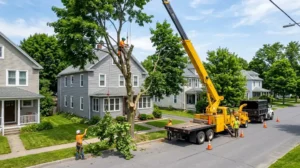
The Mohawk Valley is notorious for dense clay soil. In the spring and early summer, frequent rainfall turns yards in Whitesboro, Marcy, and Clinton into soft, saturated sponges. Driving heavy equipment like bucket trucks, track loaders, or mobile cranes across wet clay can leave 6-inch-deep ruts, compact root zones of neighboring trees, and destroy delicate turf.
Winter completely flips this equation.
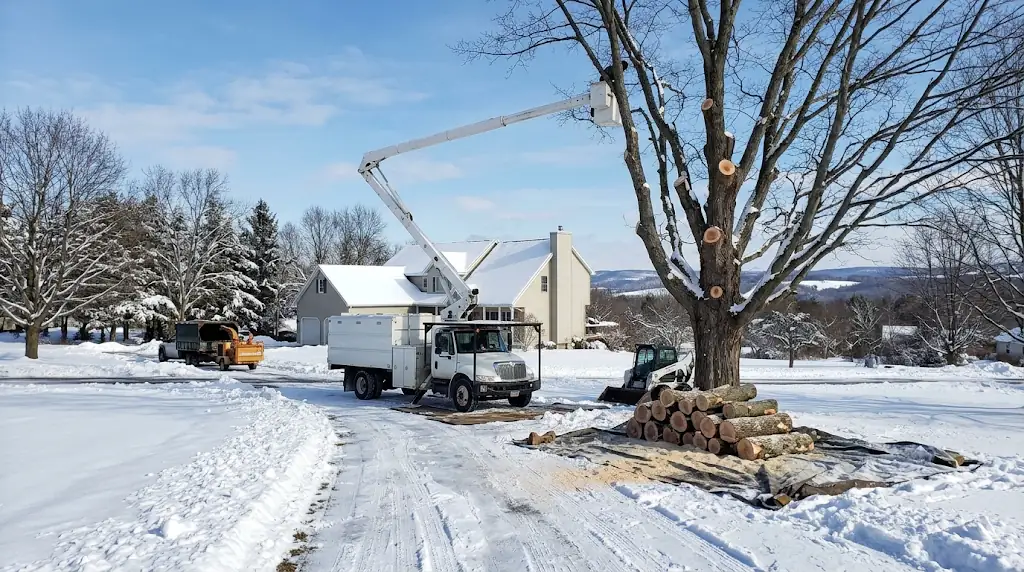
When sustained freezing temperatures set into Oneida County, the topsoil freezes solid. Frozen ground acts like a sheet of temporary concrete, allowing heavy machinery to maneuver across your yard without sinking or leaving deep tread marks. Additionally, a layer of compacted snow acts as a natural shock absorber, cushioning the impact when heavy trunk sections are lowered to the ground.
If you have an expansive lawn, an established driveway, or tight access points that would be ruined by heavy machinery in July, winter is the safest time to execute a residential tree removal.
Bare Branches Mean Faster, More Efficient Labor
Labor hours dictate a substantial portion of any tree removal quote. In winter, deciduous hardwoods (like maples, oaks, and birches) drop their leaves, creating major operational efficiencies that lower project costs:
- Reduced Weight and Volume: A mature hardwood in full summer foliage carries thousands of pounds of water weight in its leaves alone. Leafless winter branches are significantly lighter, putting less strain on rigging lines and allowing ground crews to haul wood faster.
- Faster Brush Chipping: Dragging leafy branches to the wood chipper in July is slow, bulky work. Without foliage, bare limbs feed smoothly into commercial chippers in a fraction of the time, cutting hours off the job.
- Clear Sightlines: Without dense leaf canopies blocking the view, sawyers and climbers can inspect the entire architecture of the tree from the ground. They can immediately spot hidden decay pockets, structural fractures, weak V-crotches, and intersecting utility lines, allowing for a safer, faster dismantling plan.
Less time on-site directly translates to lower labor costs on your final bill.
Zero Risk to Surrounding Gardens and Zero Disease Spread
If your target tree stands directly over prized perennial gardens, ornamental hostas, or delicate summer landscaping, removing it in July is nerve-racking. No matter how carefully a crew rigs limbs down, active garden beds are vulnerable to foot traffic and falling debris.
In the winter, your garden beds and foundation plantings are completely dormant and protected beneath snow cover.
Furthermore, cold-weather cutting prevents the spread of devastating plant diseases. Warm weather draws active beetles, aphids, and airborne fungal spores that infect fresh pruning wounds. During Upstate New York winters, insect vectors and pathogens are dormant or dead. If you need structural tree trimming and pruning on oak or fruit trees, winter dormancy is the biologically ideal window to prune without exposing the tree to disease.
The Major Catch: Proactive Removal vs. Storm Emergencies
While proactive winter tree removal is cheaper, winter tree emergencies are the exact opposite.
Do not confuse scheduled winter maintenance with calling a crew out in the middle of a blizzard. If you leave a dead, brittle ash tree standing near your garage and a December lake-effect snowstorm drops two feet of wet snow on it, the branches will snap.
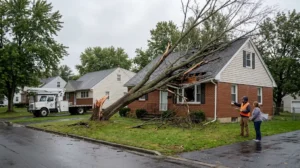
Once a multi-ton trunk crashes through your roof or tangles in live power lines, you are no longer paying off-peak rates. You are paying for emergency tree removal services involving emergency crew mobilization, hazardous crane stabilization, icy working conditions, and immediate roof tarping.
The strategy for smart homeowners in the Mohawk Valley is simple: Identify your dead or hazardous trees in late autumn, and schedule their removal for mid-winter before severe ice storms make the decision for you.
What About Stump Grinding in Winter?
A common question is whether stumps can still be removed when the ground is frozen.
The short answer is yes, modern commercial stump grinders can easily chew through frozen topsoil. However, when the frost depth penetrates 12 to 18 inches deep during a bitter January stretch, grinding takes longer and puts extra wear on carbide cutting teeth.
Depending on conditions, many homeowners choose to have the tree safely felled and cleared at a discounted winter rate, then bundle their professional stump grinding for early spring once the ground thaws.
Lock in Mohawk Valley Winter Savings
Waiting for the warm weather rush to deal with an unstable or hazardous tree usually means longer wait times, higher prices, and unnecessary property risk during winter storms.
At Utica Tree Removal, our fully insured crews have the specialized cold-weather rigging gear, cranes, and experience to safely dismantle any tree, regardless of snow or freezing conditions. We serve residential and commercial properties throughout Utica, Rome, New Hartford, Whitesboro, Clinton, and across the Mohawk Valley.
Take advantage of off-season scheduling and protect your property before the next major winter storm hits.
Contact Utica Tree Removal today for a free on-site winter estimate.